




How to Choose a Feeder Lift Cylinder for Combine Harvesters
During harvesting operations, combine harvesters must operate reliably under demanding field conditions. As a critical hydraulic component, the feeder lift cylinder plays an essential role in controlling the feeder house. It controls the lifting, lowering, positioning, and holding of the feeder house. The cylinder must perform these functions while supporting dynamic loads under demanding field conditions. Combine harvesters operate in environments characterized by dust, crop residue, vibration, moisture, and fluctuating loads. These operating conditions require a robust hydraulic actuator capable of delivering sufficient force, controlled movement, structural durability, and reliable service life. At Newstar, we specialize in the research, development, and manufacturing of hydraulic cylinders, servo cylinders, and non-standard hydraulic equipment. With extensive experience in hydraulic cylinder design and manufacturing, Newstar develops hydraulic solutions for agricultural machinery and other demanding applications. This guide explains the main specs, working details, and steps for buying. It helps machine builders and buyers pick the best cylinder for combine harvesters.
Role of Feeder Lift Cylinders in Combine Harvesters
Controlling Feeder Structure Elevation and Movement
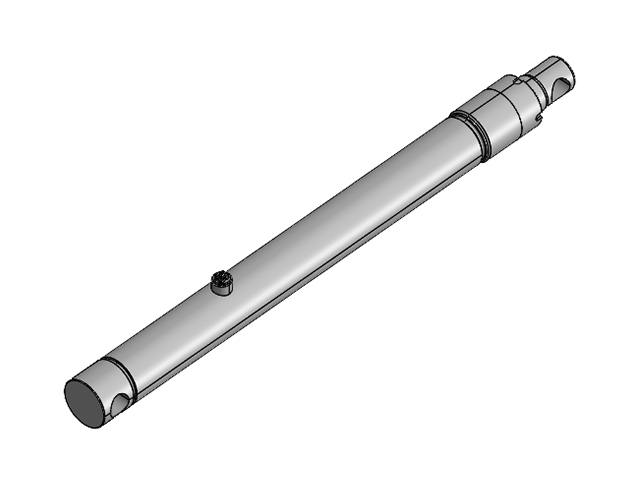
Inside a combine harvester, the feeder house links the front header to the main threshing parts. The feeder lift cylinder acts as the primary hydraulic actuator for this lifting function. It controls the vertical position and, depending on the machine configuration, the positioning of the feeder assembly and header. Sometimes the driver drops the header close to the soil for short plants. Other times, the driver raises heavy tools for tight turns or road travel. The cylinder must react quickly and smoothly to the driver’s commands.
Sustaining Dynamic Loads in Heavy Harvesting Conditions
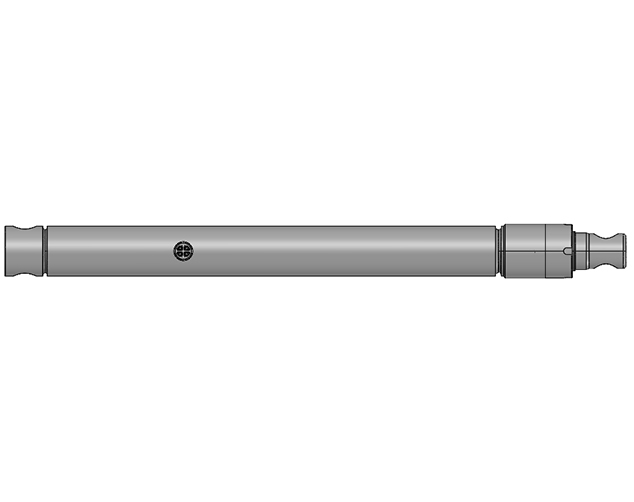
Farm work puts a lot of stress on the front assembly. The weight shifts constantly, and rough ground causes heavy shaking. Besides moving parts, the Feeder Lift Cylinder gives crucial physical support. It keeps the heavy header at an exact working angle. The cylinder must withstand dynamic loads, vibration, and occasional shock loads generated by uneven terrain and changing harvesting conditions. If the cylinder is weak, the machine faces big problems. Insufficient cylinder performance may result in header position instability, reduced height-control accuracy, increased mechanical loading, or premature wear of related components.
Key Feeder Cylinder Specifications for Accurate Selection
Bore Diameter and Rod Diameter Alignment
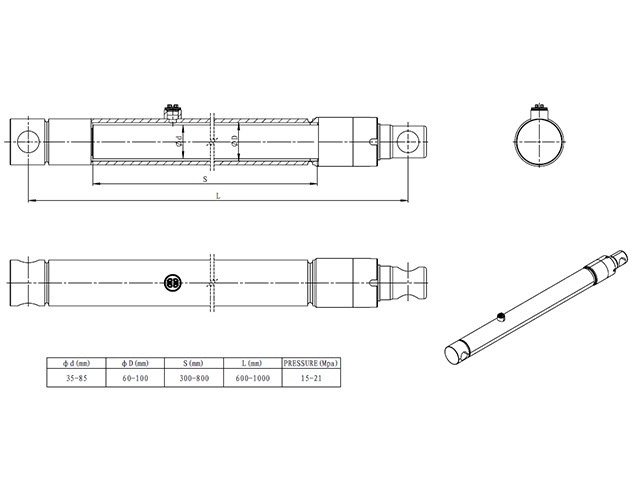
Selecting the appropriate cylinder size starts with evaluating the required bore diameter and piston rod diameter. The bore diameter directly influences the cylinder’s available hydraulic force at a given operating pressure. The piston rod diameter affects buckling resistance, structural stiffness, and the cylinder’s ability to withstand compressive loads. This strength prevents the rod from bending under heavy pushing loads. At Newstar, our normal Feeder Lift Cylinder has a bore span of 60–100 mm. This pairs with a rod size spanning 35–85 mm. Buyers must pick a good ratio between the bore and the rod. This choice creates enough lifting power. It also keeps the rod stiff against side forces when the header lifts unevenly.
Stroke Length and Overall Retracted Length
The stroke length (S) controls the total straight movement. The retracted length (L) sets the mounting space when the unit is fully shut. Our Feeder Lift Cylinder design gives normal stroke lengths of 300–800 mm. It also has total closed lengths of 600–1000 mm. Designers need to check these numbers carefully. The chosen stroke must give complete moving room without getting stuck. Also, the closed size has to fit perfectly inside the metal frame of the combine harvester.
Operating Pressure and Maximum Thrust Force
Fluid pressure and pushing power are closely connected. The Feeder Lift Cylinder is designed for operating pressures of up to 21 MPa, depending on the configuration. At the specified operating pressure, the cylinder can provide a maximum thrust force of up to 12 metric tons, depending on the cylinder configuration.
Mounting Dimensions and Interface Compatibility
Smooth assembly depends on picking the right mounting parts. Key mounting parameters include clevis dimensions, pin diameter, mounting-center dimensions, port location, and connection type. Proper pin matching is very important. Correct mounting alignment helps minimize excessive pin loading, side loading, uneven wear, and premature component failure.
Practical Selection Guide Based on Load and Stroke
Calculating Required Thrust Force for Various Crops
Determining the required cylinder thrust requires a load analysis based on the header weight, linkage geometry, cylinder mounting position, operating pressure, and applicable dynamic loads. Different farm tools create different stress levels.
Avoiding Size Mismatch and Mechanical Interference
Selecting an incorrectly sized cylinder can result in installation problems, insufficient force, excessive mechanical loading, or unnecessary downtime. It can also cause parts to hit each other or ruin the seals. To prevent these space issues, designers should map the exact moving path of the cylinder. An excessive stroke length can create mechanical interference or exceed the available range of motion. It can make the cylinder hit its own end or crash into the frame. On the other hand, choosing a rod that is too thin is risky. The rod might bend under the heavy, hanging weight of the header.
Quality Features of High-Performance Agricultural Cylinders
Advanced Plating and Corrosion Resistance Tech
Agricultural machinery is frequently exposed to moisture, dust, crop residue, fertilizers, chemicals, and changing weather conditions. To keep the metal rods safe from tiny holes, Newstar uses a special coating. The double-layer chrome plating is designed to improve corrosion resistance and surface durability. We test this coating for more than 500 hours in a Neutral Salt Spray (NSS) chamber. The metal surface hardness exceeds 950HV. The enhanced surface protection helps maintain piston rod integrity and contributes to reliable sealing performance in demanding operating environments.
High-Pressure Sealing Systems and Thermal Endurance
Fluid power depends on strong seals. These seals must survive high heat and sudden pressure jumps. Newstar uses Parker and Simrit sealing solutions in applicable hydraulic cylinder configurations. These kits offer great protection against heat and daily wear. We pair these seals with very smooth metal tubes. Together, the sealing system is designed to minimize internal and external leakage and maintain reliable pressure retention. This keeps the holding pressure steady.
Newstar Custom and OEM Hydraulic Cylinder Solutions
Tailored Specifications for Machinery OEM Brands
As a full fluid power supplier, Newstar offers deep custom OEM services. We can change mounting pin setups and move fluid ports to special spots. We also create unique stroke lengths. Our engineering team develops custom hydraulic cylinders for combine harvesters, corn harvesters, tractors, and other agricultural machinery.
Rigorous Quality Control and Automated Testing
At Newstar, strict quality checks are a core part of our factory work. Our team uses modern friction welding methods. We also use smart, automatic testing machines. Every single cylinder goes through these tests. We check the starting pressure and the exact stroke length. We also test the safety pressure and look for zero fluid leaks. These inspections help ensure that each cylinder meets the specified dimensional, pressure, stroke, and leakage requirements before shipment.
Conclusion
Picking the proper feeder lift cylinder is very important. It improves machine performance, header control, and daily harvest amounts. Buyers need to check the technical details carefully. These details include bore and rod sizes, stroke length, and the 21 MPa working pressure. They also include the 12T pushing limit. By checking these, builders ensure the parts fit well and avoid breakdowns in the dirt. At Newstar, we mix deep factory knowledge with modern metal treatments. We also use strict ISO quality checks to supply strong fluid power tools globally. You might need normal farm cylinders or completely custom units. Either way, our design group is ready to help you reach your goals.
Are you ready to improve your harvest machines with highly reliable fluid power parts? Contact Newstar to discuss your feeder lift cylinder specifications, mounting requirements, operating conditions, and OEM customization needs with our engineering team.
FAQ
Q: What is the main job of a feeder lift cylinder in a combine harvester?
A: A feeder lift cylinder is a hydraulic actuator used to control the lifting, lowering, positioning, and support of the feeder house and header assembly on a combine harvester. It also adjusts the angle and supports the weight of the feeder house and header. This happens during daily field work and road travel.
Q: How do operating pressure and thrust force affect feeder lift cylinder selection?
A: Operating pressure and required thrust force are key factors in feeder lift cylinder selection. At a given pressure, a larger bore diameter provides greater theoretical hydraulic force. The required cylinder size should also account for load, linkage geometry, mounting position, and dynamic operating conditions.
Q: Can Newstar manufacture custom feeder lift cylinders for agricultural machinery OEMs?
A: Yes. Newstar provides full custom design and OEM factory services. We can change bore sizes and stroke lengths. We also adjust mounting points and seal kits. This ensures the parts fit the exact physical needs of combine harvesters, corn pickers, and tractors.