




How to Choose the Right Excavator Quick Coupler Cylinder
In modern construction and mining, site efficiency depends on how seamlessly an excavator switches between attachments. The hydraulic quick coupler cylinder serves as the actuating component of a powered quick coupler, providing the hydraulic force required to operate the attachment engagement or locking mechanism. A powered quick coupler can allow operators to change compatible attachments from the cab, reducing attachment changeover time and improving machine utilization. However, selecting an incorrectly sized or incompatible cylinder can result in inadequate actuation force, mechanical interference, hydraulic leakage, premature wear, or unreliable coupling performance. As a specialized manufacturer of hydraulic cylinders, servo cylinders, and custom non-standard equipment at Newstar, we engineer robust quick coupler cylinder solutions across construction machinery, aerial platforms, shipbuilding, mining, and aerospace sectors. This guide breaks down parameter sizing, pressure matching, and selection strategies to help engineers select an appropriately sized and configured cylinder for their specific excavator quick coupler application.
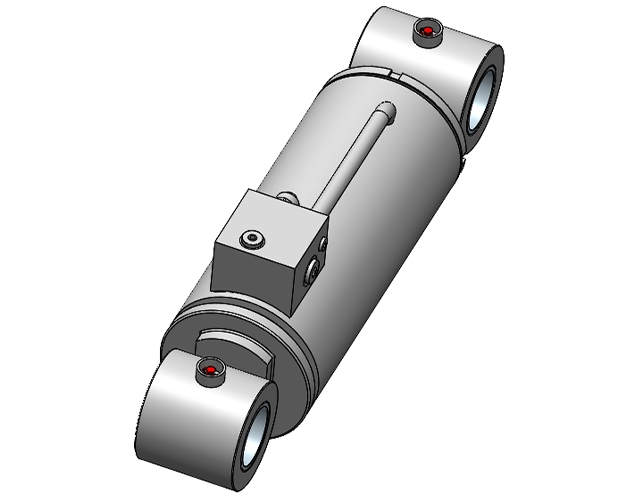
Role of Quick Coupler Cylinders in Excavators
Enabling Rapid Attachment Changes on Job Sites
In fast-paced job sites, equipment versatility is vital for project schedules. A hydraulic quick coupler cylinder is an actuating component used to operate the engagement or locking mechanism of a powered excavator quick coupler. Depending on the coupler design, this may involve a locking pin, wedge, hook, or other mechanical mechanism. By enabling operators to change tools without leaving the cab, this actuator boosts productivity, allowing one machine to perform digging, crushing, and material handling in rapid succession.
Reliable Cylinder Actuation Under Variable Operating Loads
Excavator attachments endure severe shocks, torsional stress, and vibrations during operation. The primary function of the cylinder is to provide reliable hydraulic actuation of the coupler’s engagement or locking mechanism throughout the operating cycle. The cylinder should provide consistent actuation performance under vibration, impact, and varying attachment loads. Reliable cylinder performance is one part of the overall quick coupler system, which must be designed and operated according to the applicable safety requirements.
Why Cylinder Selection Extends Beyond Basic Dimensions
Matching Hydraulic Pressure to Excavator System Capacity
A common mistake during quick coupler cylinder sizing is focusing solely on length while ignoring operating pressure. Excavator auxiliary hydraulic circuits operate across varied pressure thresholds. Using a cylinder with an insufficient pressure rating in a higher-pressure hydraulic circuit can result in seal damage, seal extrusion, premature wear, or cylinder failure. Conversely, an inadequate combination of pressure rating, bore diameter, and linkage geometry may result in insufficient cylinder force for the required coupler actuation.
Balancing Thrust Force and Structural Locking Load
Calculating hydraulic cylinder force requires evaluating the relationship between bore area, operating pressure, and required mechanical holding force. When an excavator strikes rock, reaction forces push back the wedge. The cylinder must provide sufficient actuation force for the coupler mechanism under the specified operating and load conditions.
Key Technical Specifications for Quick Coupler Sizing
Bore Diameter and Rod Diameter
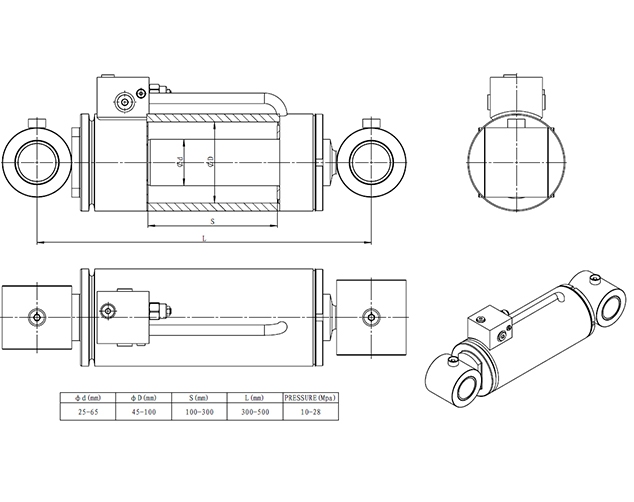
Bore diameter determines the effective piston area and therefore has a direct effect on theoretical extension force at a given hydraulic pressure. Rod diameter affects the effective retraction area and contributes to piston-rod strength and resistance to buckling under applicable loading conditions. Bore size determines extension force, while rod diameter provides column strength against buckling. At Newstar, our standard quick coupler cylinder features a bore range of 45–100 mm paired with a rod range of 25–65 mm. These bore and rod diameter ranges allow the cylinder to be configured for different force and installation requirements.
Stroke Length and Retracted Length
Accurate dimensional matching prevents binding inside the hitch frame. Key parameters include stroke length and overall retracted length. Engineers should verify that the cylinder stroke matches the required travel of the coupler mechanism and provides adequate clearance throughout the full operating range.
Working Pressure Ratings and Maximum Thrust Capacity
Working pressure and force define an actuator’s operational limits. Newstar’s current quick coupler cylinder specifications list an operating pressure range of 10–28 MPa and maximum thrust of up to 20T. The pressure and force capability can support high-force actuation requirements where installation space is limited, subject to the coupler design and hydraulic circuit.
Mounting Interface and Pin Distance Alignment
Physical integration requires verification of mounting type, pin diameter, pin-to-pin dimensions, mounting width, port size, port location, and overall installation envelope. Accurate mounting dimensions help prevent excessive clearance, misalignment, and premature pin or bushing wear. Port size and location should be specified separately to ensure proper hydraulic connection and hose routing.
Overcoming Common Procurement and Engineering Pain Points
Preventing Dimension Mismatch and Mechanical Binding
Replacing a quick coupler cylinder can be challenging because mounting dimensions and hydraulic specifications vary between coupler designs and machine applications. Installing an incorrectly sized cylinder causes wedge misalignment or housing binding. Engineers should map the full motion envelope before finalizing specifications.
Eliminating Pressure Drops and Unstable Locking Movement
Cylinder drift can be associated with internal leakage, seal wear, hydraulic valve leakage, trapped air, or other hydraulic and mechanical conditions. Seal degradation can increase internal or external leakage and may reduce the cylinder’s ability to maintain the required hydraulic performance. High-spec seals and precision barrels prevent fluid bypass, supporting consistent cylinder movement and reliable actuation under specified operating conditions.
Superior Engineering Features of Newstar Quick Coupler Cylinders
High Working Pressure and 20T Maximum Thrust
As a specialized hydraulic cylinder manufacturer, Newstar develops actuators engineered for demanding construction environments. Our quick coupler cylinder delivers working pressures up to 28 MPa and maximum thrust up to 20T, providing high power density in a compact structure.
Crack-Free Chrome Plating and Advanced Seal Systems
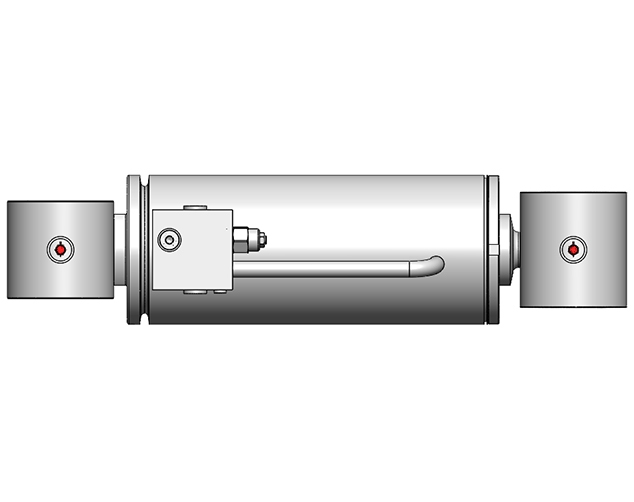
Durability is central to Newstar manufacturing. Our piston rods feature high-corrosion-resistant chrome plating, with hardness exceeding 950 HV and NSS corrosion resistance exceeding 500 hours, according to Newstar’s published quality specifications. Paired with imported Parker/Simrit seal systems, our cylinders are designed to provide reliable sealing and extended service life under specified operating conditions.
Custom OEM Solutions and Engineering R&D Capabilities
Tailored Cylinder Design by 45 R&D Engineers
When standard off-the-shelf actuators fail to meet unique attachment geometry requirements, custom engineering becomes essential. Backed by our dedicated 45-person R&D team, Newstar provides comprehensive custom design services. We tailor bore diameter, rod diameter, stroke length, retracted length, mounting configuration, and port location to specific OEM requirements.
Rigorous IATF16949 Automated Testing and Inspection
Quality and reliability are central to Newstar production. Operating under IATF16949, our facilities utilize friction welding and automated test stations. Newstar’s intelligent test stations can test breakaway pressure, stroke, internal leakage, external leakage, and proof pressure, with pressure control accuracy within 0.5%.
Conclusion
Choosing the right excavator quick coupler cylinder requires evaluating the excavator’s operating class, hydraulic system pressure, required cylinder force, bore and rod diameter, stroke length, retracted length, and mounting dimensions. Selecting an undersized or incorrectly specified cylinder compromises attachment stability, equipment safety, and productivity.
Ready to enhance your excavator attachment versatility and operational safety with application-specific hydraulic cylinder solutions? Contact Newstar today to request a quote or consult with our engineering experts on custom quick coupler cylinder requirements!
FAQ
Q: What is a quick coupler cylinder on an excavator?
A: A quick coupler cylinder is a specialized hydraulic actuator that drives the locking pin or wedge mechanism inside an excavator quick hitch. It enables operators to engage and disengage compatible attachments from the cab, depending on the quick coupler system design.
Q: What operating pressure should a hydraulic quick coupler cylinder handle?
A: The required operating pressure depends on the excavator’s hydraulic circuit and the specific quick coupler design. Our current quick coupler cylinder specifications list an operating pressure range of 10–28 MPa. The selected cylinder should have a pressure rating compatible with the excavator’s hydraulic circuit and provide sufficient actuation force for the specific coupler mechanism.
Q: Can Newstar customize quick coupler cylinders for non-standard excavator quick hitches?
A: Yes. We specializes in non-standard custom hydraulic cylinder design and manufacturing. Supported by a 45-person R&D team and IATF16949 quality control, we tailor bore sizes, stroke lengths, mounting interfaces, and sealing packages to fit specific OEM attachment system designs.
Previous: None
Next: How to Choose a Feeder Lift Cylinder for Combine Harvesters