




Why Rotary Actuators Matter in Industrial Automation
Modern factory automation involves much more than simply moving parts in straight lines. Many machines must also pivot a fixture, tip a platform, index a part, or turn a joint. These jobs need circular motion instead of basic back-and-forth travel. In these applications, a rotary actuator can be an effective solution when controlled torque and rotary motion are required.
At Newstar, we build hydraulic cylinders, servo cylinders, and rotary actuators. We also make custom equipment for tough motion-control needs. Our products are used in building machinery, lift platforms, ships, mines, and planes. For designers and buyers, it is key to know how a rotary actuator fits into a system. This is true when power, small size, and steady motion are all needed at once.
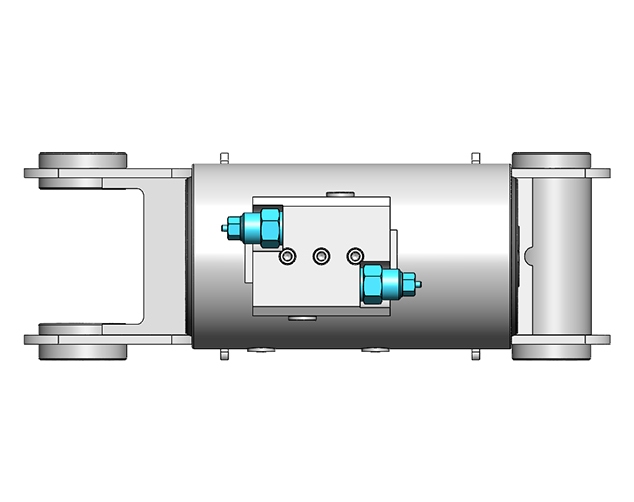
Why Automation Needs Rotary Motion
Beyond Linear Motion
Linear actuators work great for pushing or lifting. But many automated steps need turning instead. A part might need to spin between work zones. A tray might need to tilt for a process. Or a mechanical arm might need to swing to a specific spot.
A rotary actuator gives this turning force directly. It takes hydraulic pressure and turns it into torque. This is different from the straight push of a standard cylinder. Because of this, hydraulic rotary actuators are perfect for tight spaces where turning must be smooth and controlled.
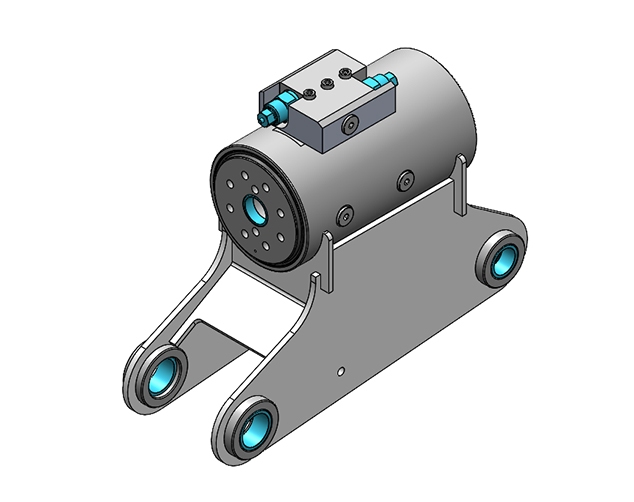
Where Rotation Adds Value
Using rotation can make a machine much simpler. Without it, you might need a linear cylinder plus extra arms and links to get the same turn. This adds weight and takes up more room.
Common uses include moving parts to a spot, flipping items, or clamping things down. In automated equipment, these turns help different parts of the factory work together. They allow a machine to move a load to the same angle over and over again. The real win is not just the spin; it is the ability to hold a heavy load steady at a precise angle.
How Hydraulic Rotary Actuators Work
Converting Hydraulic Energy
A hydraulic rotary actuator converts hydraulic energy into controlled rotary motion and output torque. Pressurized hydraulic fluid acts on the actuator’s internal mechanism, generating rotational movement at the output shaft. The exact operating principle depends on the actuator design and internal mechanism.
Different rotary actuator designs may use different internal mechanisms. Therefore, actuator selection should be based on required output torque, rotation angle, operating pressure, speed, mounting configuration, and duty cycle.
Controlling Torque and Angle
Fluid pressure creates the turning force, while the flow rate sets the speed. This means the valves, pumps, and the actuator must work as one team. For automated machines, you have to look at more than just the peak torque.
Engineers must plan for the swing angle and how heavy the load is when it starts to move. They also need to think about how often the machine will cycle. Newstar’s Rotary Actuator is available with output torque ratings from 200 to 25,000 Nm. Newstar’s Rotary Actuator features a compact structure, high space utilization, high torque output, high control precision, and excellent motion stability.
Key Automation Functions
Positioning and Indexing
Positioning is about turning a part to an exact spot. Indexing is moving between those spots in a set pattern. You see this in rotary tables and transfer lines.
The actuator must provide sufficient output torque to accelerate, move, and decelerate the load within the required cycle time. It also needs to stop exactly where it is told. This is why torque is so vital. For loads with high rotational inertia, the actuator must provide sufficient torque for acceleration and controlled deceleration. You must balance the power with the speed of the task.
Clamping and Tilting
Some factory jobs need a part to tilt before it can be fixed or checked. A rotary actuator provides the swing needed for these tilting tools. Hydraulic actuation can be advantageous in applications requiring high torque density and substantial load-handling capability. Hydraulic actuation can provide high torque output and high torque density within a relatively compact installation envelope. This makes it ideal for heavy-duty industrial tasks where space is at a premium.
Material Handling and Transfer
Rotation is also used to change the direction of a part as it moves. A gripper might spin a workpiece, or a gate might swing open. In these cases, the motion must be very steady. Sudden jerks can damage the machine or the parts. A good actuator ensures the movement is fluid from start to finish.
Hydraulic Versus Other Rotary Actuators
Hydraulic Versus Pneumatic
Air-powered units use compressed air, while hydraulic ones use oil. Both can turn a shaft, but they act differently. Hydraulic systems are much better for heavy loads and high torque. Air systems are often used for lighter, faster tasks where air lines are already in place.
Hydraulic Versus Electric
Electric motors are easy to plug into computer controls. However, hydraulic rotary actuators can provide high torque density in a relatively compact package. If a machine already has a hydraulic pump, adding a hydraulic actuator is often the most efficient choice.
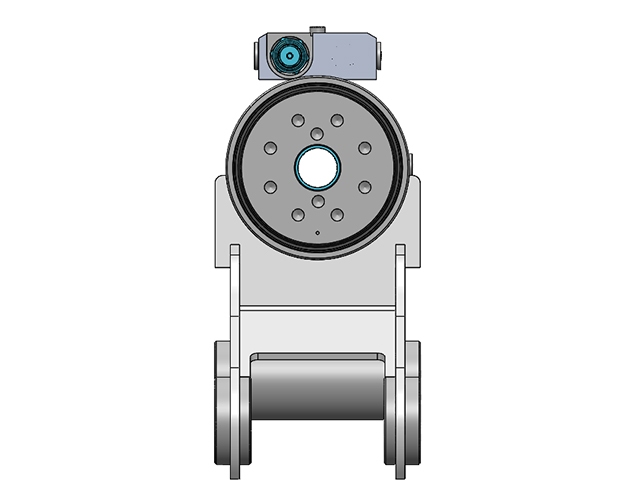
When Hydraulic Rotary Actuators Fit Best
High Torque Requirements
The main reason to choose hydraulics is strength. Some industrial machines handle high loads or operate under significant external resistance. Achieving comparable torque output with an electric drive may require a larger motor and transmission system, depending on the application. Newstar’s Rotary Actuator range handles up to 25,000 Nm, making it perfect for these heavy lifting jobs.
Compact Space Constraints
Designers often run out of room inside a machine. They have to fit wires, hoses, and frames into small gaps. Newstar makes its Rotary Actuator very compact. This helps engineers get the power they need without making the whole machine larger.
Harsh Industrial Environments
Industrial equipment may operate in environments exposed to dust, moisture, vibration, temperature variation, and other demanding conditions. Actuators must last even when things get rough. Long life comes from using the right materials and tight seals. At Newstar, we focus on precision machining and tough coatings to make sure our products keep working.
Choosing a Rotary Actuator
Torque and Rotation Angle
Start by looking at how much force you need and how far the part must turn. Do not just pick the biggest one. Calculate the actual weight and the distance from the center of the turn. This helps you find the right size for the job without overspending.
Load and Duty Cycle
How often will the machine move? An actuator that turns once an hour stays cool. One that turns every few seconds gets hot and wears out faster. You must tell the supplier how many cycles the machine will run each day. This ensures you get a unit that can handle the heat and friction.
Mounting and Control Needs
Think about how the actuator will bolt onto the machine. You also need to check the oil flow and the sensors. It is best to talk to the maker early in the design phase. This prevents mistakes like picking an actuator that cannot be easily serviced or one that does not fit the frame.
Designing Reliable Rotary Motion
Control Stability and Repeatability
Automation only works if the machine does the same thing every time. The actuator must start and stop at the exact same point. Newstar builds its Rotary Actuator for high precision. We use smart assembly tools to make sure every unit we ship performs exactly as expected.
Sealing and Structural Durability
Leaking oil is a big problem in a factory. It wastes money and makes a mess. Good seals are a must. At Newstar, we use advanced test stations to check every part. We look for even the smallest leaks and test the units under high pressure. These tests help verify hydraulic sealing performance and support reliable operation under specified working conditions.
Newstar Rotary Motion Solutions
Custom Engineering Support
Our Rotary Actuator is often used in lift platforms. It helps the basket spin or swing into the right spot for workers. This application requires stable rotary motion and controlled positioning. If you have a unique need, our R&D team can customize the design to fit your specific machine.
Manufacturing and Quality Control
Founded in 1999, Newstar has specialized in the R&D and manufacturing of hydraulic cylinders, servo cylinders, rotary actuators, and non-standard hydraulic equipment. We operate advanced production equipment, intelligent assembly lines, and intelligent test stations to support consistent manufacturing and product inspection.
Conclusion
Rotary actuators are the backbone of many automated systems. They handle the turns, tilts, and spins that straight cylinders cannot do. When you need a lot of power in a small space, a hydraulic version is usually the best path.
To get the best results, you must match the actuator to the weight of your load and the speed of your process. At Newstar, we have the tools and the experts to help you find that perfect match. We support builders with strong, reliable parts that keep industrial machines moving. Contact us today to explore more.
FAQ
Q: What is a rotary actuator used for in industrial automation?
A: It provides the turning force needed to pivot, flip, or position parts. It is used whenever a machine needs to move in a circle rather than a straight line.
Q: How does a hydraulic rotary actuator work?
A: It uses oil under pressure to push an internal mechanism. This turns the pressure into torque at the output shaft.
Q: When should I use a hydraulic rotary actuator?
A: Choose one when you need a lot of turning power, have very little space, or are already using a hydraulic system on your machine.