




How Does a Luffing Cylinder Work on an AWP
An aerial work platform must lift its boom with ease. It needs to hold the structure steady at various angles and lower it with total control. The luffing cylinder is a key hydraulic actuator in the boom elevation system of an aerial work platform. Its performance directly affects boom angle, working height, and working radius. Its performance plays an important role in controlling the boom angle.
At Newstar, we specialize in the research, development, and manufacturing of hydraulic cylinders, servo cylinders, and various non-standard equipment. Our hydraulic products are used in a wide range of applications, including aerial work platforms, construction machinery, shipbuilding and heavy industry, mining, and aerospace. Understanding how a luffing cylinder works on an aerial work platform is important for equipment manufacturers, OEM engineers, maintenance teams, and hydraulic system designers.
What Is a Luffing Cylinder?
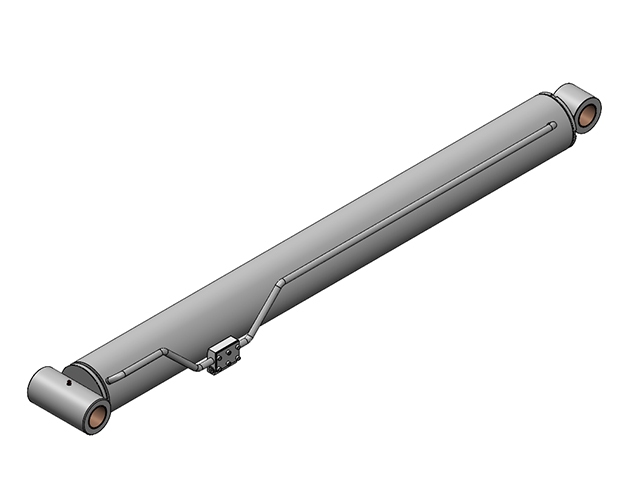
In an aerial work platform, the luffing cylinder is usually installed at the connection hinge point between the main boom and the turntable/undercarriage, or at the hinge point position of the folding boom type. It is the core hydraulic actuating component for achieving the boom’s elevation action, and it drives the boom to rise or descend through extension and retraction, directly determining the lifting height and working radius of the working platform, and is the “power joint” of the boom system.
How a Luffing Cylinder Works
Hydraulic Pressure Creates Linear Motion
The luffing cylinder’s working principle starts with fluid pressure. High-pressure oil enters the chamber and pushes against the piston. This force slides the piston and rod forward. It turns fluid energy into steady, straight-line movement.
When hydraulic fluid is directed into the appropriate cylinder chamber, the rod extends. When flow is directed to the opposite chamber, the rod retracts. The cylinder produces linear motion, while its mounting arrangement relative to the boom pivot converts that motion into controlled angular movement of the boom.
Extension Changes the Boom Angle
When the luffing cylinder extends, the distance between its mounting points increases, generating a lifting moment around the boom pivot.
One cylinder end is mounted to the turntable or undercarriage, while the opposite end is connected to the boom through a pin-mounted joint. This action creates a turning force at the pivot point.
The boom then moves upward. Its angle from the ground gets steeper. As the boom angle increases, the aerial work platform can achieve greater working height, depending on the boom geometry and overall machine design.
This shows why you must look at the stroke and the machine shape together. A long stroke does not always mean more height. The way the boom is built decides how that movement changes the angle.
Retraction Lowers the Boom
When the oil flows the other way, the rod pulls in. This makes the boom angle drop. The platform then moves toward the ground. Hydraulic valves regulate oil flow and pressure to control the cylinder’s extension and retraction speed.
How It Connects With AWP Systems
Connection With the Boom Structure
The luffing cylinder puts a lot of stress on the boom. The pins, joints, and rod sizes must be very strong. Newstar’s Luffing Cylinder offers a bore range of 40–230 mm. The rod sizes go from 25–180 mm. We offer strokes from 500–3000 mm and lengths up to 3800 mm. These choices let you pick a cylinder that fits your specific machine perfectly.
Connection With the Turntable
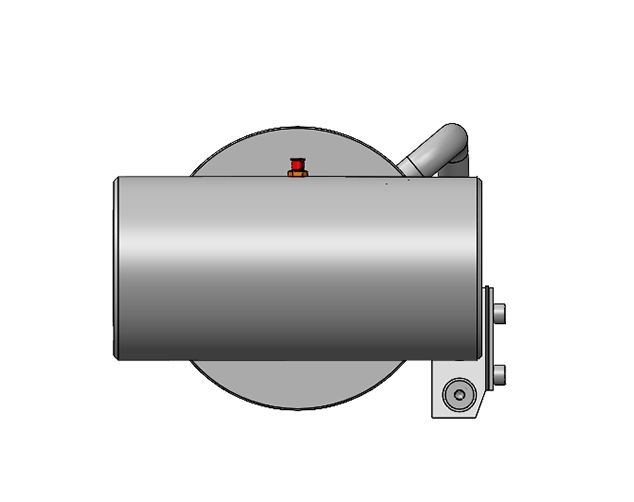
One end of the cylinder is connected to the boom through a pin-mounted joint, while the opposite end is mounted to the turntable or undercarriage. The turntable or undercarriage provides the structural mounting interface for the cylinder and boom assembly.
Proper alignment between the cylinder mounting points and boom pivot is important for minimizing unwanted side loading and ensuring smooth cylinder operation. Proper alignment helps minimize side loading and unwanted bending forces on the cylinder rod.
Connection With the Hydraulic System
The pump, valves, and hoses work with the cylinder as one unit. The hydraulic pump supplies pressurized fluid, while control valves regulate fluid direction and flow to control cylinder extension and retraction. The cylinder converts hydraulic energy into mechanical force and linear motion.
Newstar’s Luffing Cylinder is specified for operating pressures from 17 to 30 MPa, with maximum thrust up to 120T, according to the product specifications. Cylinder selection should be based on the actual load, operating pressure, mounting geometry, stroke, and duty cycle of the aerial work platform.
How Cylinder Motion Changes Platform Reach
Boom Angle and Working Height
When the luffing cylinder extends and raises the boom, the boom elevation angle increases. This uses the length of the boom to gain vertical space. The platform climbs higher as the angle gets steeper.
Boom Angle and Working Radius
The tilt also changes how far the platform reaches sideways. A boom that is low to the ground reaches further out. When you lift it up, the side reach shrinks, but the height grows. The luffing cylinder enables controlled changes in boom elevation, contributing to the machine’s overall working envelope.
Geometry and Working Envelope
Never look at the stroke by itself. Engineers should evaluate the boom pivot locations, boom length, cylinder mounting points, stroke, and operating angles together when determining the required cylinder dimensions.
For new projects, define these shapes first. Then, you can pick the right hydraulic cylinder dimensions.
Why Luffing Cylinder Design Matters
Load Capacity and Structural Strength
The cylinder must be strong enough to lift the arm and the people on it. The size of the bore and rod matters a lot.
Newstar’s Luffing Cylinder combines a compact structure with high load capacity, making it suitable for aerial work platforms where installation space and load requirements must both be considered.
Smooth Motion and Position Control
Smooth and controllable boom movement is important for precise positioning and operator control. Fine machining and good seals help. If the parts fit well, the boom responds exactly how the operator wants.
Sealing and Leakage Prevention
Good seals are vital for outdoor work. Dirt and rain can ruin a cylinder. Corrosion or surface damage on the cylinder rod can accelerate seal wear and increase the risk of leakage.
According to Newstar’s quality assurance information, its high-corrosion-resistant chrome-plated rods have achieved hardness above 950 HV and neutral salt spray resistance of more than 500 hours.
Choosing a Luffing Cylinder
Match Bore, Rod, and Stroke
The bore size sets the lifting power. The rod diameter should be selected based on the required load capacity, buckling resistance, mounting configuration, stroke, and operating conditions.
Check Pressure and Mounting Geometry
Engineers need to check the oil pressure and the push-pull force. You also need to know where the pins sit and how much room you have. The maximum and minimum boom elevation angles should also be considered during cylinder selection.
Providing these design parameters allows Newstar’s engineering team to evaluate the application and develop a hydraulic cylinder that matches the required mounting dimensions, load, stroke, pressure, and operating conditions.
Consider Duty Cycle and Environment
Lifts often work in dusty or wet places. They might move up and down all day. You need to pick a cylinder that can handle that specific stress and weather.
Newstar can customize cylinders to meet these tough demands. Our R&D team helps build exactly what you need.
Common Problems and Maintenance Checks
Leakage and Boom Drift
Look for oil around the seals and hoses. If the boom drifts downward under load, possible causes include internal leakage across the cylinder piston seals, leakage in hydraulic valves, or other issues within the hydraulic circuit. A systematic hydraulic inspection is required to identify the actual cause.
If the boom drifts, check the whole system. Sometimes the problem is a valve, not the cylinder itself.
Slow or Jerky Boom Movement
Insufficient lubrication or excessive wear at boom pins and bushings can also contribute to abnormal movement or mechanical play, depending on the machine design and maintenance requirements.
Inspect the hydraulic fluid condition, cylinder rod surface, seals, mounting points, pins, and bushings to help identify the cause of abnormal movement.
Rod, Seal, and Pin Wear
Check the rod surface often. Look for rust or deep marks. Also, check the pins and bushings at the ends. If they get loose, the boom will feel shaky. Fix these small issues before they become big, expensive problems.
Newstar Luffing Cylinders for Aerial Platforms
Engineering for Aerial Work Platforms
The world AWP field calls for sticking to hard safety and work rules. Since 2009, we have supplied over 200,000 cylinders to big names like JLG, Genie, Skyjack and Snorkel.
Custom Cylinder Development Support
Every lift is a bit different. A cylinder should fit the machine, not the other way around. Newstar helps you design custom parts. We look at your machine’s weight, size, and pressure needs.
This service is perfect for companies building new models or looking for a better replacement for an aerial lift hydraulic cylinder.
Conclusion
The luffing cylinder is the muscle that tilts the boom. It uses oil pressure to push or pull. This action moves the arm up or down. By controlling boom elevation, the luffing cylinder contributes directly to the aerial work platform’s working height and working radius.
When buying or designing, look at more than just the size. Think about the load, the weather, and how long the part will last. Proper cylinder selection, manufacturing quality, hydraulic integration, and preventive maintenance all contribute to reliable and controlled boom operation.
Contact Newstar to discuss a custom luffing cylinder or hydraulic cylinder solution for your aerial work platform.
FAQ
Q: What does a luffing cylinder do on an aerial work platform?
A: It tilts the boom up and down. This sets the height and the reach of the basket.
Q: How does a boom lift hydraulic cylinder work?
A: It uses oil to push a piston. This creates a straight force that moves the boom arm.
Q: What causes a boom lift cylinder to drift?
A: It is usually a leak. It could be a seal inside the cylinder or a problem with a hydraulic valve.
Q: How do I choose a luffing cylinder for a boom lift?
A: Look at the weight it must lift, the oil pressure, and the space available. Always match the cylinder to the boom’s design.