




How a Slave Cylinder Keeps Boom Lifts Level and Safe
Working at great heights requires extreme care. Even a tiny tilt can put an operator in danger when they are over 100 feet in the air. When using an aerial work platform, telescopic boom lift, or articulating boom lift, workers need the machine to stay steady on rough ground. Most people look at the engine power or the boom’s reach. However, one of the key components to staying stable is the hydraulic platform leveling system.
At Newstar, we are a top manufacturer focused on the research and building of high-quality hydraulic cylinders, servo cylinders, and custom equipment. Our engineering skills help power hydraulic equipment in many fields. These include construction, shipbuilding, mining, and aerospace. To keep workers safe high up, our team develops precision hydraulic components. These parts provide smooth, synchronized motion and great reliability. Among these, the Slave Cylinder is vital for keeping the work area perfectly balanced.
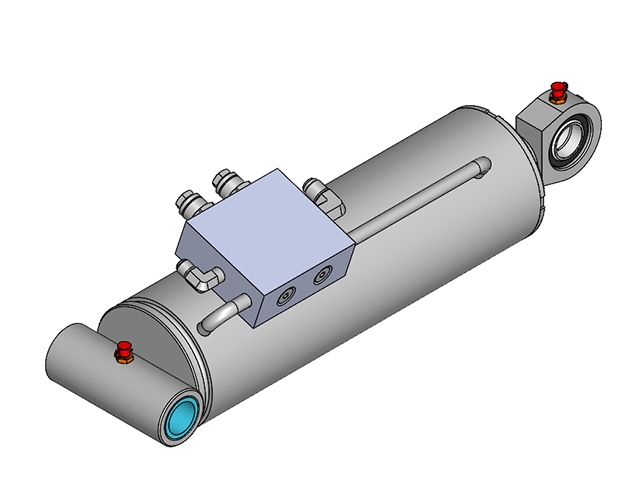
Understanding the Boom Lift Leveling System
What Is a Slave Cylinder
In an aerial work platform, a Slave Cylinder is installed at the joint of the aerial work platform, and cooperates with the master cylinder to realize the leveling action of the platform. It is required to run smoothly without shaking, abnormal noise, etc.
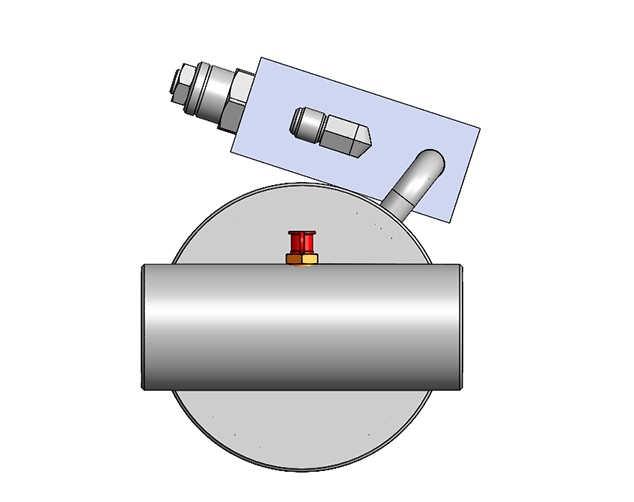
Where Is It Installed
Where this part is placed matters a lot for rapid hydraulic response. The Slave Cylinder is put right at the joint of the aerial work platform. It is mounted exactly where the platform meets the end of the boom arm. Because of this, any movement in the cylinder precisely adjusts the platform angle. This spot helps reduce lag and ensures the leveling happens in real time.
The Mechanics of Platform Leveling
Slave Cylinder vs Master Cylinder
To see how a boom lift stays steady, you must look at how the master cylinder and Slave Cylinder work together.
- The Master Cylinder:The master cylinder serves as the hydraulic reference cylinder. As the boom angle changes, it displaces hydraulic fluid, which drives the slave cylinder to maintain platform level.
- The Slave Cylinder:The slave cylinder is installed at the joint of the aerial work platform, and cooperates with the master cylinder to realize the leveling action of the platform.
Closed-Loop Hydraulic Synchronization
The way these two parts operate together depends on fluid physics. When an operator moves the boom, that motion actuates the master cylinder. This action pushes hydraulic oil out of the master cylinder. The oil then flows through high-pressure hoses into the Slave Cylinder.
Hydraulic oil is nearly incompressible, allowing accurate hydraulic force transmission. So, the amount of oil moved from the master cylinder causes the corresponding displacement inside the Slave Cylinder. This shift makes the leveling cylinder move at the right speed to balance the boom’s angle. In traditional hydraulic leveling systems, synchronization can be achieved mechanically through hydraulic fluid displacement without requiring electronic control.
Why Automatic Leveling Matters
Ensuring Operator Safety
Operator safety is a primary design consideration. As a boom folds or stretches, the angle changes fast. Without a leveling mechanism, the basket floor would tilt. This would create a dangerous fall risk. The hydraulic system keeps the platform flat and parallel to the ground. This gives workers a safe place to stand.
Enhancing Load Stability
Smooth movement also protects tools and materials in the basket. Abrupt motion or shaking can make heavy tools fall. This can hurt people on the ground or break parts. A high-performance hydraulic cylinder prevents vibration. It makes sure the lift travels smoothly and stays steady.
Why Choose Newstar for Aerial Work Platforms
Engineering for Smooth Operation
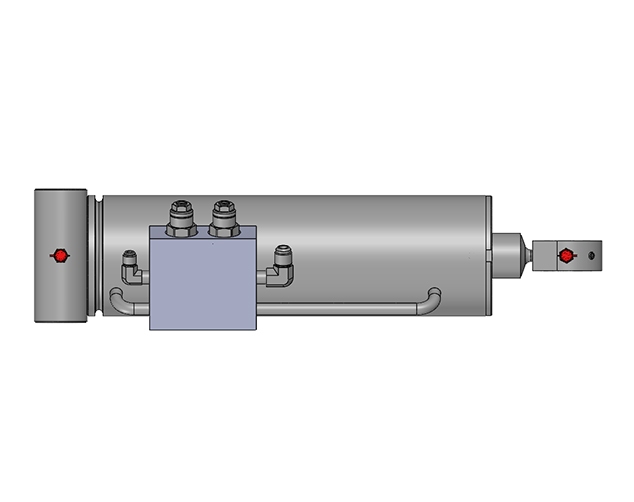
At Newstar, we know that components must deliver reliable performance during aerial work. Our Slave Cylinder is engineered for demanding aerial work platform applications. It has a bore range of 50- 105 mm and a rod range of 30- 70 mm. The length is between 310 and 700 mm. It works at a steady pressure of 21MPa. Also, it can deliver a maximum output force of 18T.
We make sure every unit runs very smoothly. There is no shaking or abnormal noise. This gives the user a stable operating performance and solid performance.
Built for Tough Industrial Environments
Our factory uses advanced manufacturing equipment to make products that work in hard conditions. We use Parker/Simrit seals from overseas. These seals handle high pressure and minimize internal leakage. We also protect our cylinders with a special plating line. This double chrome coating has high surface hardness and resists rust. It reaches a hardness of over 950HV. It also lasts over 500 hours in salt spray tests.
Every cylinder undergoes rigorous testing. We check for leaks, pressure, and smooth movement.
Conclusion
The safety of modern boom lifts depends on the reliable hydraulic synchronization of the master-slave hydraulic setup. By turning fluid movement into leveling fixes, the slave cylinder significantly improves operator safety. Newstar is a trusted partner with years of experience. We carry PICC insurance and continue to provide high-quality hydraulic solutions.
Do you want to make your equipment more reliable and safe? Contact Newstar today. We can provide custom hydraulic cylinders made for your specific needs.
FAQ
Q: How does a slave cylinder work in a boom lift?
A: It connects to a master cylinder at the boom hinge. When the boom moves, oil is pushed from the master to the slave cylinder. This fluid pressure makes the slave cylinder move at the same time.
Q: How do you keep a boom lift platform level?
A: You use two hydraulic cylinders that work together. A master cylinder responds to boom movement. It then sends oil to the slave cylinder on the platform. This loop fixes the platform’s position automatically.
Q: What causes a boom lift platform to lose its level?
A: This usually happens if oil leaks past old seals or if air gets into the hoses. Damage to the metal rods can also cause issues. Using parts with high-quality seals and strong coatings helps prevent these problems and keeps the lift accurate.