




Why Plunger Locking Cylinders Improve Boom Lift Safety
Hydraulic pressure loss, internal leakage, or hose failure can quickly turn a routine aerial work platform operation into a serious safety hazard. Whether it is a construction site, utility maintenance project, or industrial facility operation, boom lift machines should maintain proper positioning when carrying large loads under difficult working conditions. Slight boom drifting because of leakage, pressure drops, or failures may not only jeopardize operators’ safety but also result in high costs associated with maintenance costs and downtime.
For OEM manufacturers and fleet owners, hydraulic cylinder selection now involves far more than lifting performance alone. For manufacturers and operators of lifting machines, selecting the proper hydraulic cylinder solution should ensure safety compliance, reliable machine operation, and reduced expenses.
That is why Plunger Locking Cylinders are a valuable addition to any hydraulic lifting system. By incorporating a positive mechanical locking mechanism, the Plunger Locking Cylinder provides positive load holding even during hydraulic pressure loss.
This article explains the advantages of the Plunger Locking Cylinders compared to the traditional hydraulic cylinders considering such aspects as safety, load holding capability, durability, maintenance, and lifecycle costs. Besides, you will learn how Newstar engineers can be useful for aerial work platform manufacturers.
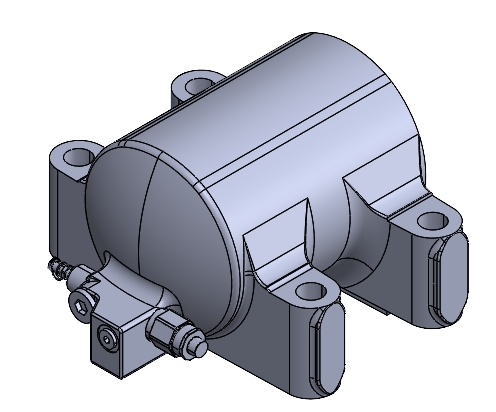
Defining Plunger Locking Technology
A Plunger Locking Cylinder differs from a standard cylinder. Standard models depend on fluid pressure and external valves. The locking type adds a mechanical lock for boom sections and outriggers.
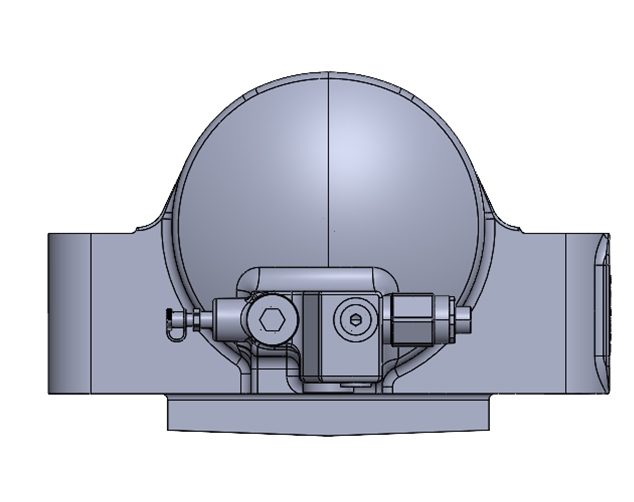
How Newstar Achieves Rigid Locking
Newstar designs the cylinder so the plunger extends and then locks in place. This creates a positive mechanical locking point that prevents unintended movement. The cylinder is typically installed at boom hinge points, outrigger pads or turntable joints. If pressure drops, the mechanical stop keeps the structure from moving.
Essential Technical Parameters for Performance
Our standard models cover an 80-120 mm bore, run at 35 MPa and deliver up to 40 T of thrust. These values allow the cylinder to handle peak loads on heavy aerial lifts while keeping motion smooth and repeatable.
Comparing Safety Performance
Safety drives most selection decisions. Standard cylinders can drift if a hose bursts or a valve sticks. The locking cylinder adds a physical barrier that does not rely on pressure. One of the most common safety concerns in aerial work platforms is boom drift caused by internal leakage or pressure loss.
Fail-Safe Protection During Pressure Loss
From 2009, we supplied over 200,000 cylinders to big names like JLG, Genie, Skyjack and Snorkel. Our cylinders have been widely adopted by leading aerial work platform manufacturers and have demonstrated reliable performance in demanding operating environments.
Stability for Long-Term Fixed Operations
Standard cylinders may creep over hours because fluid passes the seals. The locking cylinder helps maintain stable positioning with minimal drift over extended holding periods. We fit Parker/Simrit seals that resist temperature swings and maintain extremely low internal leakage during extended holding operations.
Load Holding and Reliability
Load holding must account for wind gusts and dynamic forces, not just static weight.
Superior Load Bearing Capacity Comparison
The 40 T thrust rating supports large telescopic booms. In side-by-side tests, the locking cylinder maintains position under sustained load, while standard cylinders are built more for speed and travel cycles.
Locking Hydraulic Cylinder Benefits for Booms
Telescopic and articulated lift makers gain both safety and strength. The same cylinder family covers Lift Cylinder, Jib Cylinder and Extension Cylinder roles, so one design approach covers the full machine.
Resilience in Harsh Environments
Our cylinders operate in coastal shipyards and dusty mines. Corrosion can significantly reduce the service life of conventional cylinder rods and sealing systems.
Advanced Sealing and Plating Solutions
Newstar runs an Eco-plating line that meets zero-discharge rules. Proprietary high-corrosion, crack-free chrome plating verified by SGS (≥950HV hardness, >500hrs salt spray resistance), outperforming traditional coatings.
Durability Features of Newstar Products
Newstar utilizes advanced friction welding technology to improve structural integrity and manufacturing consistency. Compared with conventional welding methods, friction welding helps reduce welding defects and enhances the fatigue resistance of critical cylinder components.
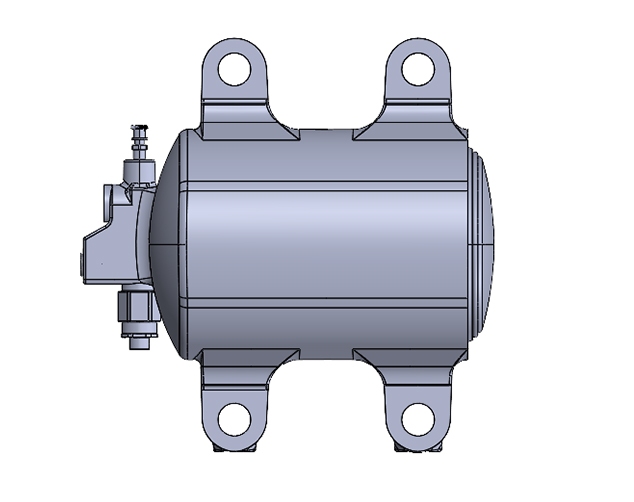
Analyzing Life Cycle Costs
The higher first cost of a locking cylinder is offset by fewer repairs and lower downtime.
Maintenance and Longevity Advantages
Each unit passes closed-loop tests for breakaway pressure, internal leakage and proof pressure at 0.5 % accuracy. The result is consistent field performance and reduced service calls.
Minimizing Operational Risks and Insurance
Newstar carries PICC liability coverage of $1 million per event. Buyers gain both a reliable part and documented risk protection.
Aerial Lift Cylinder Selection Guide
Selection depends on height, load type and duty cycle.
Choosing for Boom Lift Applications
High-reach machines that carry personnel need a mechanical lock. Standard cylinders still suit auxiliary functions where motion is frequent and safety stakes are lower.
Selecting the Right Newstar Solution
Our 45-person engineering group can supply hollow-rod versions that cut weight by more than 30 % or high-pressure units for extreme loads. Both options keep the same locking function.
Conclusion
For aerial work platforms and other personnel lifting equipment, load security should never rely solely on hydraulic pressure. Although traditional hydraulic cylinders prove sufficient for many motion control systems, their use is not appropriate for providing safety in terms of load securing in personnel lifting applications.
Plunger Locking Cylinders bring an additional mechanical locking function that prevents boom drifting and ensures safe positioning in case of pressure loss. This means fewer hours of machine downtime, lower cost for maintenance, increased serviceability, and higher confidence when using such equipment in tough conditions.
Having more than 25 years of experience in manufacturing high-quality hydraulic components, unique Eco-Plating technology, a comprehensive Quality Control Program, and skilled engineers working for the company, Newstar offers you a variety of custom-made Plunger Locking Cylinders that can be perfectly used in your application.
Contact Newstar today to discover how our high-performance Plunger Locking Cylinder solutions can elevate your equipment safety and reliability standards!
FAQ
Q: What is a plunger locking cylinder in boom lifts?
A: In aerial work platforms, a Newstar Plunger Locking Cylinder locks booms and outriggers mechanically. The plunger extends to create a rigid stop that holds position even if hydraulic pressure is lost.
Q: Why is a locking cylinder safer than standard cylinders?
A: Standard cylinders rely on fluid pressure alone. The locking cylinder adds a physical stop that prevents drift or sudden collapse during pressure loss or long static holds.
Q: What are the main applications of a Plunger Locking Cylinder?
A: These cylinders appear on telescopic and articulated boom lifts. They also serve shipbuilding, mining and general construction equipment that needs secure load holding.